Kaminarimon / Nakamise approach · 雷門・仲見世
Kaminarimon Gate, Sensoji, Asakusa, Taito-ku, Tokyo, JapanSuggested starting landmark. Individual shops have their own hours and contacts.
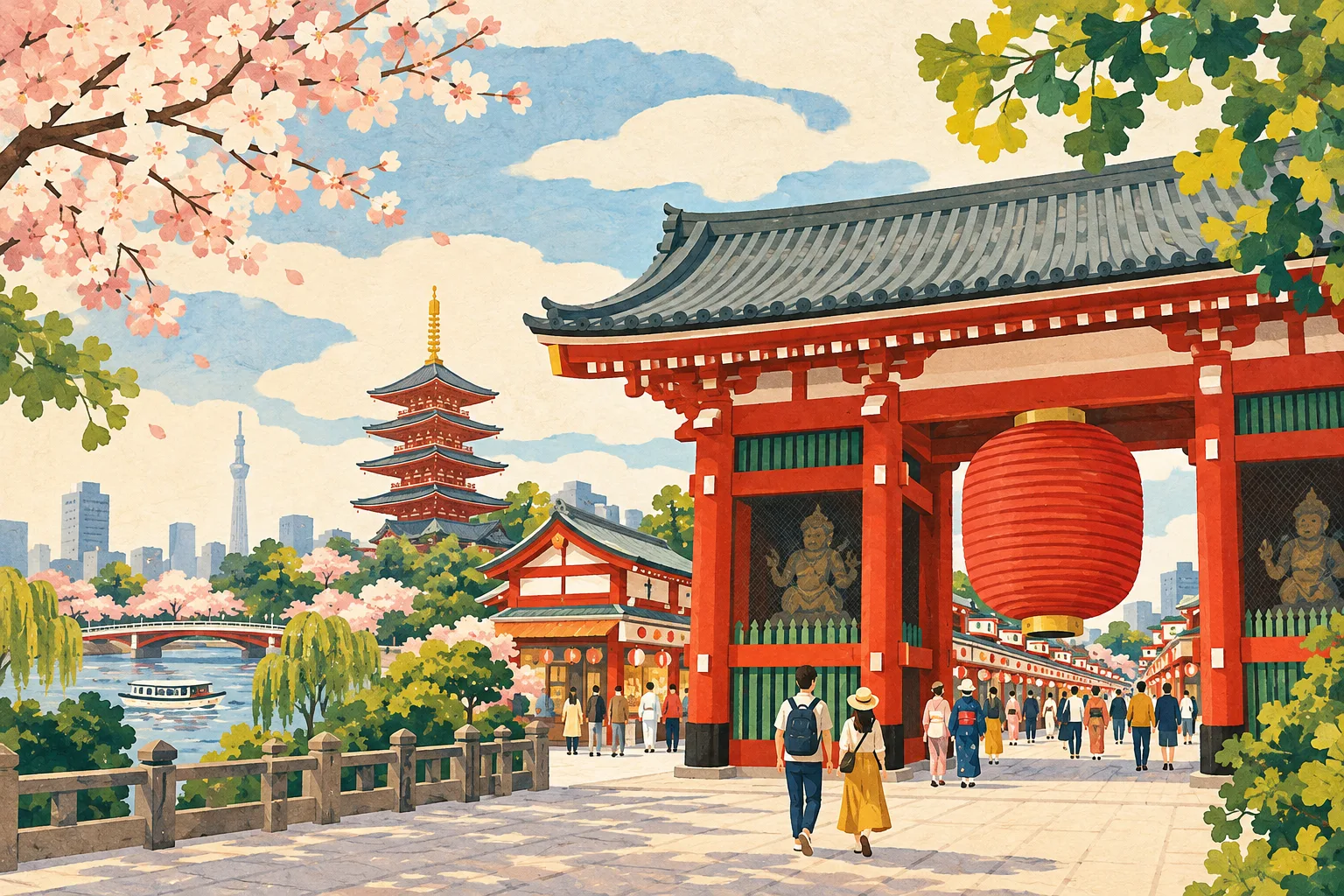
Plan a manageable Asakusa half-day with a temple route, station advice, lunch break and optional riverside finish.
How to use this guide: An AI-assisted, source-linked planning guide, not a firsthand travel report. Official venue details were checked on 16 October 2026. Routes, visit lengths and meal budgets are editorial suggestions; check current operator notices before travel.
Give Asakusa a single coherent visit: Kaminarimon → Nakamise → Sensoji → a seated meal → the Sumida River. That order gives you a clear start and an optional outdoor finish. You can enjoy the neighborhood without booking a cruise or traveling to another district immediately afterward.
Our suggested allowance is three to four hours locally, plus your journey from the hotel. It is an estimate for browsing and resting, not a timed walking tour. If you have only two hours, choose the temple approach and one break; omit the river rather than rushing the whole sequence.
| Stop | Suggested allowance | Planning choice |
|---|---|---|
| Station to Kaminarimon | 15–30 minutes | Find the correct exit and orient yourself. |
| Nakamise and Sensoji | 60–90 minutes | Browse and visit without blocking the main approach. |
| Meal or café | 45–60 minutes | Use a seated break to reset the pace. |
| Optional river walk | 30–45 minutes | Continue only if the weather and energy suit. |
GO TOKYO’s official area guide identifies the Tokyo Metro Ginza Line, Toei Asakusa Line and Tobu Skytree Line as ways to reach Asakusa. When checking directions, keep the operator and exit in the result. A station name without the line is not enough to establish your final walk.
For a Ginza Line arrival, save Tokyo Metro’s Asakusa station page and use its station map and barrier-free information. If you need an elevator, check the appropriate route and any service notices before selecting an exit. Your best accessible exit may differ from the one a generic walking search suggests.
Keep Kaminarimon saved as a landmark, but move away from busy exits to check your phone. If your group becomes separated, choose a meeting point off the main pedestrian flow rather than directly beneath the gate.
Begin with Kaminarimon, continue through Nakamise and then take time at Sensoji. The temple’s own English guide identifies these landmarks and describes Nakamise as a street selling souvenirs and traditional goods. These are places to explore, not three separate appointments to complete at maximum speed.
Sensoji is a place of worship. Keep the approach clear when photographing the gate, follow local signs and respect restrictions inside religious spaces. Do not assume that an open approach means every hall, shop or facility follows the same opening hours.
If browsing is your main interest, check the individual shops you particularly want rather than arriving very early and assuming all stalls will be trading. If the temple is the priority, begin with the religious visit and leave shopping flexible. The two versions suit different goals even though they share the same street.
After the main approach, look for a seated meal on a nearby street instead of committing to the first queue. The useful question is whether the menu, price and waiting time suit your day. We have not independently tested restaurants for this guide, so there is no invented “local favorite” or ranked food list.
Set a personal allowance of ¥1,200–2,000 for lunch and ¥500–800 for a drink or snack. This is an example budget, not a price survey or a promised meal deal. If you buy food to take away, follow the seller’s instructions about where to eat and how to dispose of packaging.
For dietary restrictions, show a clear written explanation and ask about ingredients and preparation. Souvenir shopping can wait until after the meal if carrying bags is making the visit awkward. Leaving room for a proper rest is often more valuable than adding another activity.
The river gives the visit a different pace after the temple approach. Use live navigation from your meal stop toward the Sumida River and decide how much farther you want to walk. GO TOKYO’s Azuma-bashi page places the bridge between the Sensoji area and the direction of Tokyo Skytree; it is a useful orientation point.
You do not need to cross the river or continue all the way to another attraction. If you want to add Skytree, first check the full walking or rail route, the attraction’s ticket arrangements and how much time you want to spend there. Replace the optional river stroll with that plan rather than silently adding a second half-day.
A cruise is another separate choice. Confirm the operator, boarding point, sailing date and destination directly before buying. This guide does not include a cruise in its timing or budget, and the route still works without one.
| Part of the visit | Budget approach |
|---|---|
| Temple approach and neighborhood walk | No paid tour is built into this itinerary; check any specific facility you choose. |
| Lunch plus a drink/snack | ¥1,700–2,800 personal allowance per adult |
| Shopping, transport and extensions | Add separately; there is no complete-trip total without your chosen purchases and journeys. |
For rain: shorten Nakamise browsing, make a seated meal the main break and skip the river. Do not assume the entire route is sheltered. In heavy rain, rescheduling an outdoor visit can be more sensible than replacing every pause with a dash between buildings.
For heat or fatigue: shorten the route before adding a second district. Keep drinking water and take indoor breaks as appropriate. A half-day itinerary is a flexible allowance, not a target you must finish.
For a wheelchair or stroller: check station elevators and the specific temple access route you need. Crowds and pavement conditions can affect how manageable the visit feels. We have not tested this route for continuous step-free access.
Is Asakusa the same as Asakusabashi? No. Check the destination and railway line carefully before traveling; do not choose a similarly named station without looking at the map.
Can I combine Asakusa with a day trip? You can design a longer day, but this guide protects time for Asakusa itself. If you also want Kamakura or Yokohama, use a separate day where possible rather than spending the visit watching a departure time.
What is worth saving offline? The operator’s station map, the temple information page, your first landmark, a meal option and the route back to your accommodation. Keep one nearby alternative meal so an unexpected closure does not force a distant detour.
Use these suggested stops to plan your visit. Select a place below to see its map, or open Google Maps for directions. Check the destination and entrance before setting off; suggested routes have not been tested for step-free access.
Explore the suggested places on Google Maps.
Suggested starting landmark. Individual shops have their own hours and contacts.
Telephone: 03-3842-0181
Temple office enquiries: 09:00–16:30, excluding Sundays and public holidays. English telephone support is not confirmed.
Optional riverside finish. This is a public landmark, not a staffed visitor attraction.
Spotted an outdated detail? Send a correction with the guide URL and a current official source.
Kamakura day trip: Hasedera, the Great Buddha and the coast ↗
Yokohama waterfront itinerary: Minato Mirai to Osanbashi ↗
Kamakura or Yokohama: which Tokyo day trip should you choose? ↗