Hasedera · 鎌倉 長谷寺
3-11-2 Hase, Kamakura, Kanagawa 248-0016, JapanTelephone: 0467-22-6300
First temple stop. Check the official admission window before visiting.
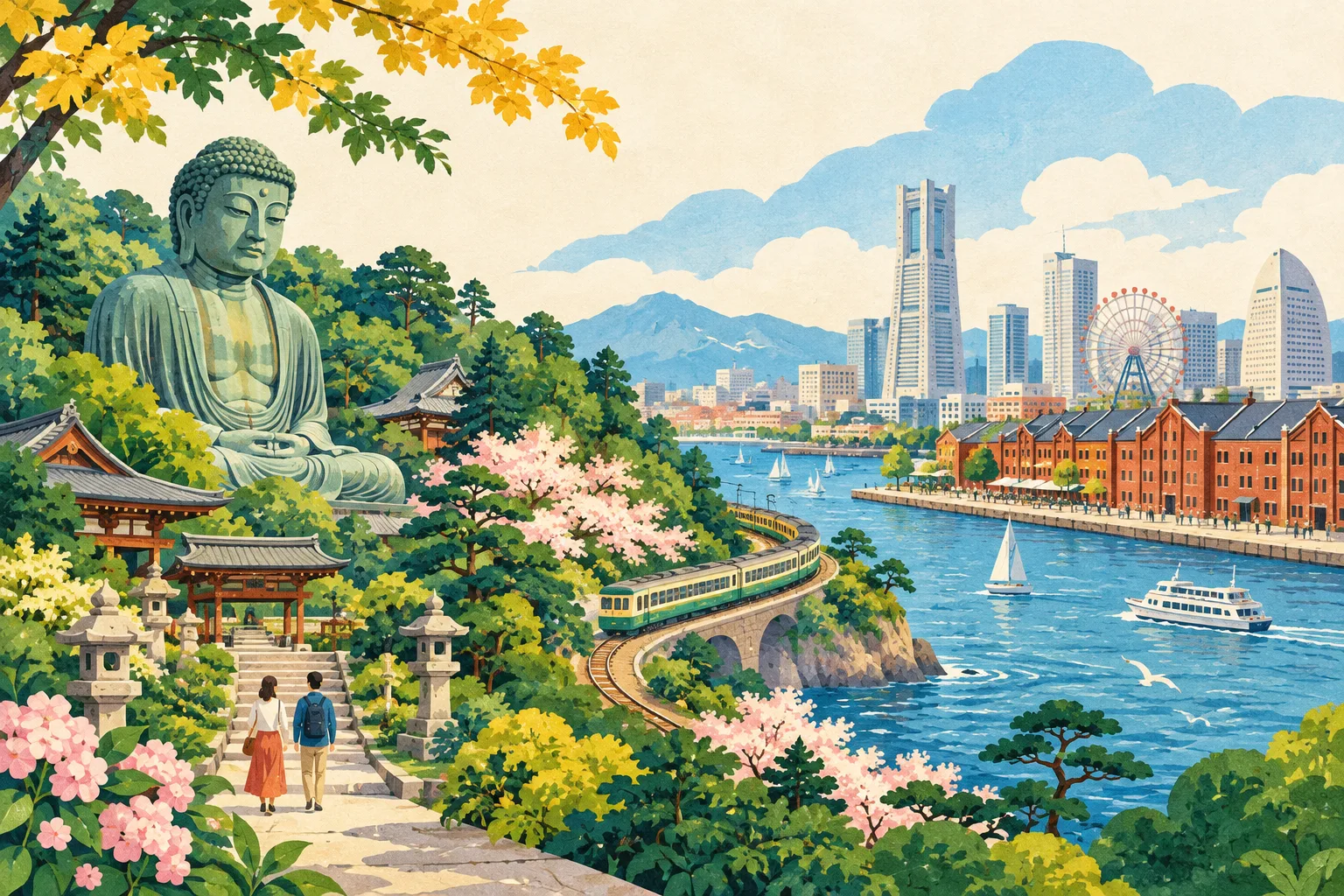
Compare temple visits, waterfront walks, weather flexibility and sample costs to choose the day trip that fits your plans.
How to use this guide: An AI-assisted, source-linked planning guide, not a firsthand travel report. Official venue details were checked on 16 October 2026. Routes, visit lengths and meal budgets are editorial suggestions; check current operator notices before travel.
Choose Kamakura if the Great Buddha and a focused temple visit are the main reason you want to leave Tokyo. Choose Yokohama if you want a harbor walk, time for a meal and more opportunities to make an indoor stop. If you have only an afternoon and no specific temple you must see, our suggested default is the smaller version of the Yokohama waterfront walk.
That is an editorial recommendation for the routes in this publication, not a ranking of the two cities. Kamakura offers much more than our Hase route, and Yokohama offers much more than Minato Mirai. Compare the actual day you would take, rather than trying to choose a universally “better” destination.
| Decision | Kamakura Hase route | Yokohama waterfront route |
|---|---|---|
| Main experience | Hasedera and Kotoku-in, with optional coast | Minato Mirai, Red Brick area and optional Osanbashi |
| Suggested local time | About 5–6 hours | About 3–4 hours without a museum |
| How to shorten | Two temples; omit the coast | Finish at the Red Brick area |
| Wet-weather adjustment | Shorter outdoor visits and indoor lunch | Choose a confirmed indoor activity and reduce the walk |
| Admission plan | Separate tickets for the two temples | Pay only for the attractions you choose |
| Access question | Check temple slopes, steps and usable routes | Check station elevators and the length of each walking section |
The time allowances are our planning estimates and exclude travel from your accommodation. They are not measured route durations. For a fair comparison, add the same things to both columns: hotel travel, meals, queues and any activity reservations.
Pick Kamakura when you can name the temple visit you are most looking forward to. Our Kamakura day-trip guide groups Hasedera and the Great Buddha in Hase, then leaves the coast optional. That gives you a workable day without trying to cover every temple on the city map.
Check the Kotoku-in visitor page and Hasedera admission page before selecting a start time. Religious sites have admission windows, so a late arrival can remove the main reason for the trip. Put your highest-priority visit first if your available time is limited.
Choose a different plan if the thought of two outdoor visits does not appeal, or if your group needs access arrangements that you have not yet confirmed. “Temple town” does not mean that every route is flat or that all attractions sit beside one station.
Pick Yokohama when you want an adaptable outing rather than a list of ticketed sights. Our waterfront guide gives you several stopping points. You can enjoy one harbor section and a meal, or continue to a viewpoint when the weather and your energy suit.
If an indoor attraction matters, choose it before finalizing the walk. For example, CUPNOODLES MUSEUM’s official information distinguishes admission from extra activities and lists closure days. A museum can anchor the day only if it is open and its participation arrangements work for you.
Do not interpret flexibility as an entirely indoor or weatherproof route. The harbor walk still involves outdoor sections between buildings. In poor weather, change the substance of the plan: one indoor visit and a nearby meal, with only a short outdoor stretch if conditions improve.
For Kamakura, search to Hase Station if you are following our temple route. For Yokohama, compare arrival at Sakuragicho or Minatomirai and a return from near the point where you expect to finish. Enoden’s railway tools help with the Hase connection; the official Yokohama walking guide gives context for the waterfront area.
Record three things for each option: door-to-first-stop time, number of transfers and the journey home. A headline train duration leaves out the part where you leave the station and find the attraction. Do not choose solely by whichever destination has the shortest rail segment.
Passes should follow the route. List the journeys you will actually make, price them using current operator information, and compare that sum with any proposed pass. A pass that suits a multi-stop railway day is not automatically the best value for a single neighborhood visit.
| Example per adult | Kamakura | Yokohama |
|---|---|---|
| Food and drink allowance | ¥1,700–2,800 | ¥1,500–2,500 |
| Core route admission | ¥700 for standard entry to Hasedera + Kotoku-in at checked rates | No booked paid attraction required for our basic walk |
| Optional extras | Separate facilities, shopping and extra stops | Museum entry, activities, cruises or shopping |
| Transport | Add your actual round trip and local rides | Add your actual arrival and return journeys |
These examples combine checked admission details with editorial food allowances. They are not package prices, a citywide price survey or a complete spending forecast. Temple admission figures were checked on 16 October 2026 and can change. Compare your selected meals and attractions before deciding which day is cheaper.
If you want to control spending, remove extras before reducing the time available for a proper meal or rest. A simple walk can be enough for Yokohama; a focused temple pair can be enough for Kamakura. There is no need to buy an activity merely to make the day feel complete.
Both in one day? Possible to plan, but it changes the relaxed style of these guides. If you must combine them, choose one main activity in each place, confirm the connection and leave the optional coast or museum out. Do not add the full duration of both routes to a day already constrained by trains and admission windows.
With young children? Start with what they will enjoy, then reduce transitions. For Yokohama, confirm a specific activity if you are promising one. For Kamakura, leave room between temple visits for food and a rest rather than expecting constant sightseeing.
With limited mobility? Neither destination wins automatically. Check the exact stations, usable entrances, toilets and rest opportunities for your route. A smaller, confirmed section of either city is a better choice than a full itinerary based on an unverified accessibility assumption.
Still undecided? Choose the one attraction or setting that matters most, check the forecast, and compare your complete journeys. Save the other city for another day. For a shorter outing that stays within Tokyo, consider our Asakusa half-day guide.
Use these suggested stops to plan your visit. Select a place below to see its map, or open Google Maps for directions. Check the destination and entrance before setting off; suggested routes have not been tested for step-free access.
Explore the suggested places on Google Maps.
Telephone: 0467-22-6300
First temple stop. Check the official admission window before visiting.
Telephone: 0467-22-0703
Separate temple admission. Check current visitor rules and the barrier-free route.
Suggested food or shopping break. Use the official site for the contact relevant to your shop, event or building.
Telephone: 045-211-2304
Optional harbor viewpoint. The number is for the terminal, not a cruise booking service.
Spotted an outdated detail? Send a correction with the guide URL and a current official source.
Kamakura day trip: Hasedera, the Great Buddha and the coast ↗
Yokohama waterfront itinerary: Minato Mirai to Osanbashi ↗
Asakusa first-visit guide: Sensoji, Nakamise and the river ↗