Hase Station · 長谷駅
Hase Station, Kamakura, Kanagawa, JapanArrival point for the temple route. Use the operator website for station enquiries.
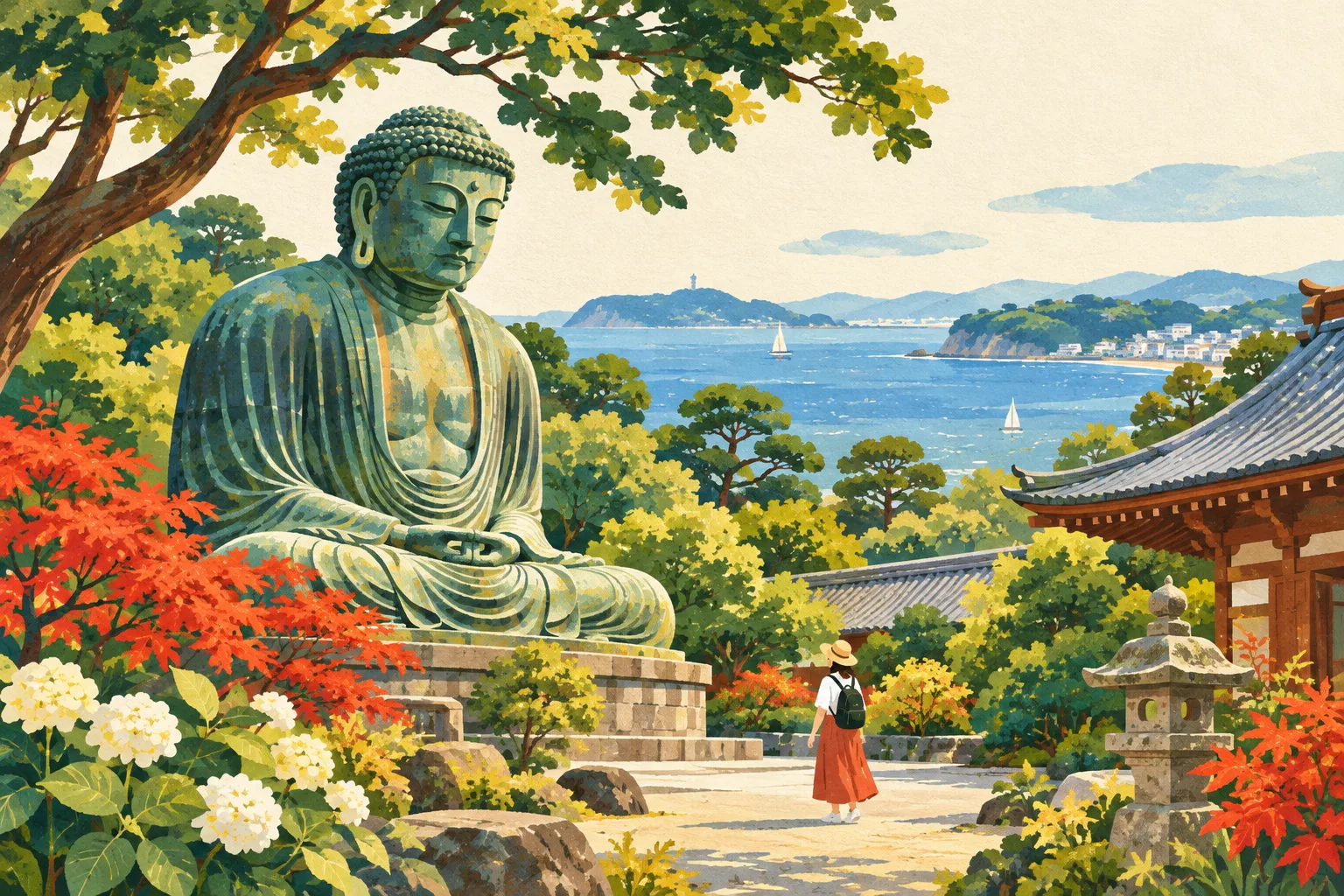
A practical Hase-area itinerary with temple admission details, a flexible lunch stop and a shorter route for limited time.
How to use this guide: An AI-assisted, source-linked planning guide, not a firsthand travel report. Official venue details were checked on 16 October 2026. Routes, visit lengths and meal budgets are editorial suggestions; check current operator notices before travel.
For a first Kamakura day trip, build the day around Hase Station, Hasedera and Kotoku-in. Those two temple visits give the day a clear purpose. The coast is an optional finish, rather than another appointment you have to reach. This plan suits travelers who want time to look around, have a seated lunch and return without rushing.
Allow roughly five to six hours in the area, excluding travel from your accommodation. This is our suggested allowance, not a measured tour duration: queues, photography, mobility needs and longer meals can change it. If you have only three hours locally, keep the two temples and drop the coastal extension.
| Part of the day | Suggested allowance | What to do |
|---|---|---|
| Arrival | 30 minutes | Reach Hase, orient yourself and walk to the first temple. |
| Hasedera | 60–90 minutes | Explore the areas that suit your interests and mobility. |
| Lunch | 45–60 minutes | Eat in Hase rather than transferring elsewhere. |
| Kotoku-in | 45–60 minutes | Visit the Great Buddha and pause before the next walk. |
| Optional finish | 45–60 minutes | Choose the coast or a café, then return. |
Allowances include time to linger; they are not official visit lengths or guaranteed opening windows.
Use Kamakura Station as your interchange if your journey brings you there, then take the Enoden toward Fujisawa to Hase. The reverse approach from Fujisawa may suit a different starting point. The Enoden railway website provides the station sequence, fares and timetable tools. Search from your hotel to Hase Station, not just to Kamakura, so your result includes the local connection.
Hasedera lists a walk of about five minutes from Hase Station; Kotoku-in lists about seven minutes. Those are venue access estimates, not allowances for your whole visit. Add time for crossing roads, buying tickets and finding your way. Keep your return flexible rather than booking an onward activity immediately after the temple visits.
Do not buy a day pass automatically. List the Enoden rides you actually intend to take and compare their individual fares with the current pass price. For a short out-and-back visit, the answer may differ from a day with several coastal stops.
Start at Hasedera if its opening window works for your arrival. A slower first stop makes it easier to enjoy the grounds without watching the clock at every turn. Decide what you most want from the visit before entering: temple buildings, views or time in the gardens. You do not need to include every facility.
The official admission page lists adult temple entry at ¥400, with reception normally 08:00–16:30 and closure at 17:00. It lists extended reception until 17:00, with closure at 17:30, for April–June. These details were checked on 16 October 2026; check again for your date. Separately ticketed facilities are not included in our basic budget.
Do not treat this as an entirely flat garden visit. If stairs or slopes are difficult, ask the temple which areas you can comfortably reach before paying. A shorter visit that matches your access needs is better than discovering midway that the planned route is unsuitable.
Keep lunch within the Hase part of the day. A restaurant across town creates two extra journeys just when you could use a rest. Our suggested approach is to identify two possible places along your walking route, check their menus and opening days, and choose on the day. We have not tested or ranked individual restaurants for this guide.
For budgeting, set aside ¥1,200–2,000 for a simple seated lunch and ¥500–800 for a drink or snack. These are spending allowances you can adjust, not surveyed local prices. Check the menu before ordering. For allergies or dietary restrictions, ask about ingredients and stock; a dish name or an English menu alone does not establish suitability.
Kotoku-in is the separate temple containing the outdoor Great Buddha. Buy its ticket separately rather than assuming the Hasedera ticket covers both. Its visitor information lists standard admission at ¥300. The inside of the statue is a separate optional visit; we have not included that extra charge in the basic plan.
Finish takeaway food and open drinks before approaching the entrance. The temple’s current notices prohibit food and drink brought for eating or drinking in the grounds, while allowing sealed bottles or flasks for hydration. Paper and plastic drink cups are not permitted. Follow the posted instructions on arrival.
For step-free planning, Kotoku-in publishes a barrier-free route with ramps toward the Great Buddha. Check that map against your needs; it does not establish that the streets between the station and both temples are fully accessible.
After Kotoku-in, make a deliberate choice. If the weather is pleasant and you still want to walk, use live navigation toward the coast near Hase. Treat it as a view and a stroll, not a promise of swimming or beach facilities. If it is windy, wet or getting dark, choose a café break or return from Hase instead.
This itinerary does not include Enoshima, a hiking trail or the distant temple clusters. Adding all of them changes a compact day into a transport-heavy outing. If another stop is your priority, replace the coast with it and recalculate the return journey rather than simply extending the list.
| Expense | One-adult planning amount |
|---|---|
| Hasedera + Kotoku-in standard entry | ¥700 combined at the checked rates |
| Lunch + drink/snack allowance | ¥1,700–2,800 |
| Local subtotal | ¥2,400–3,500, excluding all transport, shopping and optional facilities |
What if it rains? These are still outdoor temple visits. Shorten the walking, take a proper indoor lunch break and omit the coast. For persistent heavy rain, choose a different day or a more indoor-focused outing instead of assuming the route is sheltered.
Can I arrive in the afternoon? Yes, if both temples’ admission windows leave enough time. Check final admission, not just closing time, and visit your highest-priority temple first. Do not use the sample duration as evidence that a late arrival will fit.
What should I save before leaving? Hase Station, each temple entrance, two lunch options, the official hours pages and your journey home. Comfortable shoes, a weather-appropriate layer and a charged phone matter more than another sightseeing stop.
Use these suggested stops to plan your visit. Select a place below to see its map, or open Google Maps for directions. Check the destination and entrance before setting off; suggested routes have not been tested for step-free access.
Explore the suggested places on Google Maps.
Arrival point for the temple route. Use the operator website for station enquiries.
Telephone: 0467-22-6300
First temple stop. Check the official admission window before visiting.
Telephone: 0467-22-0703
Separate temple admission. Check current visitor rules and the barrier-free route.
Spotted an outdated detail? Send a correction with the guide URL and a current official source.
Yokohama waterfront itinerary: Minato Mirai to Osanbashi ↗
Asakusa first-visit guide: Sensoji, Nakamise and the river ↗
Kamakura or Yokohama: which Tokyo day trip should you choose? ↗